December 2025

City News & Announcements

The Changing Face of Vijayapura’s Local Economy

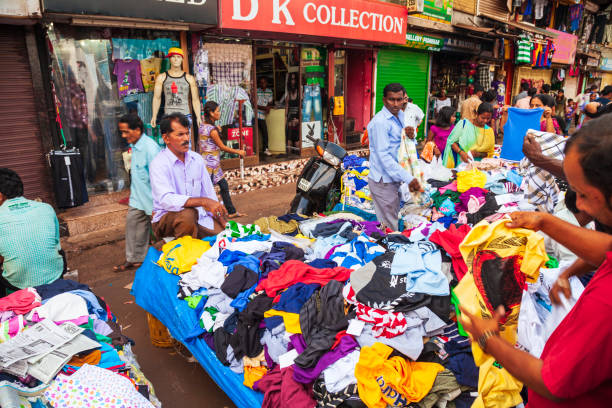
Vijayapura, the historic city in northern Karnataka, is undergoing a quiet economic transformation. Once predominantly reliant on agriculture and traditional commerce, the district’s economy now reflects a more diverse profile driven by expanding markets, construction activity, retail services, and evolving agricultural practices. The bustling bazaars of the old city continue to anchor local trade, while new commercial corridors and infrastructure projects signal growing urbanization and investment. Understanding these shifts is crucial for policymakers, businesses, and residents alike as Vijayapura charts its economic future in the decades ahead. Sector Highlights Markets and BazaarsThe traditional marketplaces of Vijayapura—from the vibrant cloth and jewelry bazaars near Gol Gumbaz to the agricultural wholesale mandis—remain vital economic hubs. These markets serve not only the city but also surrounding talukas, facilitating trade in textiles, grains, pulses, and livestock. According to a 2023 report by the Karnataka Department of Commerce, Vijayapura’s APMC (Agricultural Produce Market Committee) markets handled over ₹1,200 crore worth of agricultural produce annually, underscoring their continued importance. Construction and InfrastructureThe construction sector has emerged as a significant economic driver, fueled by government infrastructure projects and private real estate development. The expansion of highways connecting Vijayapura to Bengaluru and Maharashtra, along with ongoing road improvements under the Pradhan Mantri Gram Sadak Yojana, has created employment and attracted contractor firms to the region. The District Industries Centre (DIC) Vijayapura reported a 22% increase in registered construction-related MSMEs between 2021 and 2023, reflecting sustained sectoral growth. AgricultureAgriculture continues to be the backbone of Vijayapura’s economy, with major crops including jowar, wheat, pulses, sugarcane, and cotton. However, the sector faces challenges from erratic rainfall and water scarcity. Recent data from the Karnataka State Agriculture Department indicates that Vijayapura contributes approximately 8-10% of the state’s total pulse production. Efforts to promote drip irrigation and crop diversification have shown promise, with government schemes targeting sustainable farming practices gaining traction among progressive farmers.

City News & Announcements

Small Industries Driving Vijayapura’s Growth

Vijayapura’s economic landscape is being quietly transformed by a vibrant network of small industries and Micro, Small, and Medium Enterprises (MSMEs) that form the backbone of the district’s industrial sector. From traditional food processing units to modern textile workshops, these enterprises are not only generating employment but also driving innovation and economic diversification. According to the District Industries Centre (DIC) Vijayapura, the district has over 4,500 registered MSMEs employing approximately 35,000 people directly, making it a crucial pillar of the local economy. Key Small Industry Sectors Food ProcessingFood processing represents one of Vijayapura’s most significant small industry clusters. The sector leverages the district’s strong agricultural base, particularly in pulses, jowar, and sugarcane. According to data from the Karnataka State Small Industries Development Corporation (KSIDC), Vijayapura hosts over 800 registered food processing units ranging from small-scale dal mills to modern packaging facilities. The Deccan Herald reported in 2024 that several food processing MSMEs in Vijayapura have adopted modern packaging and branding techniques, enabling them to supply products to urban markets across Karnataka and neighboring states. These units process an estimated 150,000 tons of pulses annually, contributing significantly to Karnataka’s position as a leading pulse-producing state. Textile ManufacturingThe textile sector, deeply rooted in Vijayapura’s historical significance as a trading center, continues to thrive through small and medium-scale operations. The DIC Vijayapura reports approximately 600 textile-related MSMEs, including handloom units, power loom facilities, and garment manufacturing workshops.

City News & Announcements

Agriculture and Market Trade: The Backbone of Vijayapura’s Business

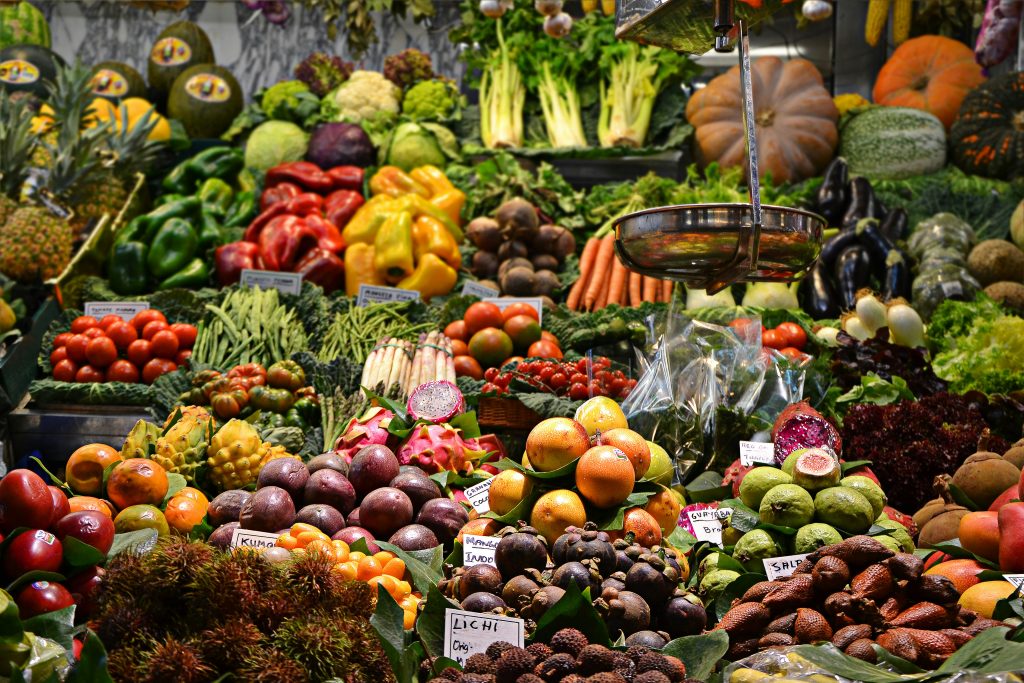
IntroductionVijayapura, in North Karnataka, is a leading hub for agricultural trade and marketing, anchoring both staple and high-value crops. Agriculture contributes directly and indirectly to local business vitality, underpinning livelihoods for thousands of farming families, transporters, traders, and market vendors. The city’s APMC markets and digital platforms (eNAM) connect farmers not just with regional buyers, but increasingly with state, national, and export markets. Major Crops: Food Grains and OilseedsVijayapura is a major producer of traditional field crops, including jowar, pulses (tur, gram), wheat, sunflower, and oilseeds. According to the Karnataka Department of Agriculture, the district regularly ranks among the top ten for pulse production in the state, with over 8–10% of Karnataka’s annual tur (pigeon pea) output. Local APMC (Agricultural Produce Market Committee) yards handle daily arrivals of grains and pulses—vital for trade in North Karnataka. Horticulture: Grapes and Pomegranates Take Center StageThe last decade has transformed Vijayapura into one of Karnataka’s strongest horticulture districts, particularly for grape and pomegranate cultivation: Grapes: As per the Karnataka Horticulture Department’s 2023–24 district profile, Vijayapura has ~6,800 hectares under table grapes (primarily Thompson Seedless and Bangalore Blue), producing ~95,000 metric tons each year. Export earnings for 2023–24 reached ₹285 crore, much of it destined for the European Union via specialized pack-houses and cold storages. Tikota, Chadchan, and Muddebihal taluks are centres of grape farming. Pomegranates: Rapid expansion and high returns have made pomegranates (Bhagwa and Arakta varieties) Vijayapura’s second major fruit crop, with ~4,200 hectares and ~52,000 metric tons annually, per the National Horticulture Board. Exports to the Middle East touched ₹32 crore in 2023–24.Both crops command premium prices versus staples, especially for farmers with irrigation, and have driven investment in post-harvest infrastructure (cold storage, grading lines).

City News & Announcements

Jobs and Employment Trends in Vijayapura

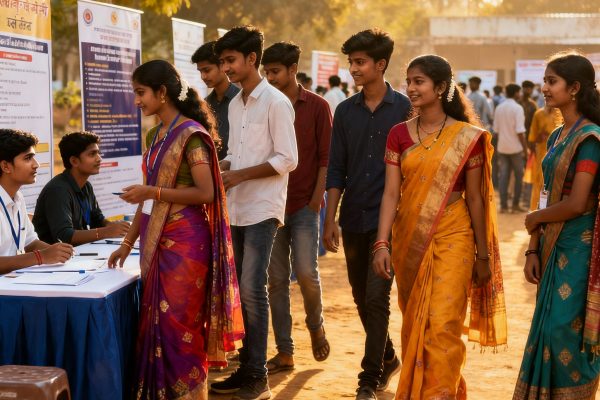
IntroductionVijayapura district, a historic commercial and agricultural center in North Karnataka, is experiencing a period of economic transition that is reshaping its employment landscape. With a population of approximately 2.4 million (Census 2011), the district’s workforce is adapting to shifting opportunities across agriculture, manufacturing, services, and the informal economy. This article examines local job trends, youth employment challenges, skill development initiatives, migration patterns, and government schemes, drawing on verifiable data from official sources and credible news reports. Employment Landscape and District Employment ExchangeThe District Employment Exchange (DEE), Vijayapura, serves as the primary official portal for job registration and placement. As of the latest annual report (2023–24) from the Karnataka Department of Skill Development, Employment and Livelihood: Registered job seekers: Approximately 78,500 active registrants, a 9% rise from the previous year. Placements facilitated: Around 2,800 formal-sector placements in 2023–24, mainly in government departments, public sector undertakings, and selected private firms. Sectoral distribution of placements: 42% clerical/administrative; 28% technical/industrial; 18% teaching and health; 12% miscellaneous services. While the DEE captures formal registrations, it is widely understood that a substantial share of Vijayapura’s workforce operates in the informal economy (agriculture, small trade, daily labor), which remains largely unrecorded in these statistics.

City News & Announcements

Tourism-Linked Businesses: Vijayapura’s Heritage as Economic Driver

Vijayapura, formerly known as Bijapur, is a historic city in North Karnataka renowned for its spectacular monuments from the Adil Shahi dynasty. The city’s architectural treasures—including Gol Gumbaz, Ibrahim Rauza, and Bara Kaman—have become powerful economic engines, driving tourism-linked businesses and supporting thousands of livelihoods across the region. According to the Archaeological Survey of India (ASI), Gol Gumbaz alone attracts approximately 1.5 to 2 lakh visitors annually, making it one of Karnataka’s most visited historical monuments. Karnataka Tourism Department data indicates that Vijayapura’s heritage sites collectively draw over 3 lakh domestic and international tourists each year, generating significant economic activity for local businesses. The tourism ecosystem supports diverse business sectors. Hotels and guesthouses have proliferated across the city, ranging from budget accommodations near the railway station to mid-range establishments around the monument circuit. Local hospitality businesses report peak occupancy during winter months (October to February), when tourist footfall increases substantially. Licensed tourist guides form another crucial component of this economy. These professionals, many of whom have obtained certification through Karnataka Tourism programs, earn between ₹500 to ₹1,500 per tour depending on group size and language requirements. During peak season, experienced guides can conduct multiple tours daily, generating substantial income.

Events & Festivals

Festival Economics: Commerce and Community

Vijayapura festivals generate significant economic activity while strengthening social bonds. Local businesses—from flower vendors to sweet shops, textile merchants to decoration specialists—see increased sales during festival seasons, supporting local crafts and traditional skills. Festival-related economic activity contributes significantly to Vijayapura’s local economy, supporting families whose livelihoods depend on seasonal celebrations. This includes temporary employment opportunities for many workers during peak festival periods.

Events & Festivals

Seasonal Celebrations: Harvest and Nature Festivals

The agricultural calendar deeply influences Vijayapura’s festival rhythm. Makar Sankranti in January marks the harvest of sugarcane and the preparation of traditional sweets like ellu-bella (sesame and jaggery mixture). Villages surrounding the city organize kite-flying competitions, with the sky becoming a canvas of colorful paper birds. Sankranti celebrations include prayers for good crops, exchange of sweets with neighbors, and strengthening of community relationships. The festivals serve as reminders of the importance of community support in agricultural life. Holi, the festival of colors, transforms Vijayapura’s streets into rainbow-hued celebration grounds. The traditional gulal (colored powder) mixed with locally-grown flowers creates a sensory explosion that brings strangers together in joyful chaos. Local preparation of natural colors using turmeric, indigo, and dried flowers has become an art form passed down through generations.

Events & Festivals

Eid Celebrations: Harmony in Diversity

Vijayapura’s Islamic heritage, dating back to the Bahmani and Adil Shahi periods, finds its most vibrant expression during Eid ul-Fitr and Eid ul-Adha celebrations. The city’s numerous mosques, including the iconic Jama Masjid, become centers of community gathering and spiritual reflection. Eid celebrations in Vijayapura are known for bringing communities together across religious boundaries. Traditional foods like sheer korma, kebabs, and biryani are shared among neighbors, fostering interfaith harmony. The traditional Eid markets that spring up around the Bara Kaman area become melting pots of cultural exchange. Tailors work overtime creating new clothes, sweet shops prepare traditional delicacies, and the aroma of dum biryani wafts through the narrow lanes of the old city. Vijayapura’s Eid celebrations attract visitors from neighboring districts, drawn by the city’s reputation for communal harmony and authentic traditional preparations. The festival showcases how religious celebrations can become vehicles for social cohesion.

Events & Festivals

Gombe Habba: When Dolls Tell Stories

Coinciding with Navarathri, the tradition of Gombe Habba (doll festival) transforms homes across Vijayapura into miniature museums of mythology and creativity. This centuries-old Karnataka tradition sees families, particularly women and children, arranging elaborate displays of dolls depicting scenes from Hindu epics, historical events, and contemporary themes. Families across various neighborhoods open their homes to visitors during the festival, showcasing collections that have been passed down through generations. The displays often feature themes related to mythology, history, and local culture, including depictions of Vijayapura’s monuments. The social aspect of Gombe Habba is as important as its artistic merit. Neighbors visit each other’s displays, sharing stories behind the arrangements while children learn about mythology and history through visual storytelling. According to local tradition, odd numbers of steps (usually seven or nine) are used for the doll displays, each level representing different realms of existence. Gombe Habba preserves cultural narratives in an accessible way. These displays make ancient stories vivid and memorable for children, serving as effective means of cultural transmission across generations.

Events & Festivals

The Nine Nights of Divine Grace: Navarathri Celebrations

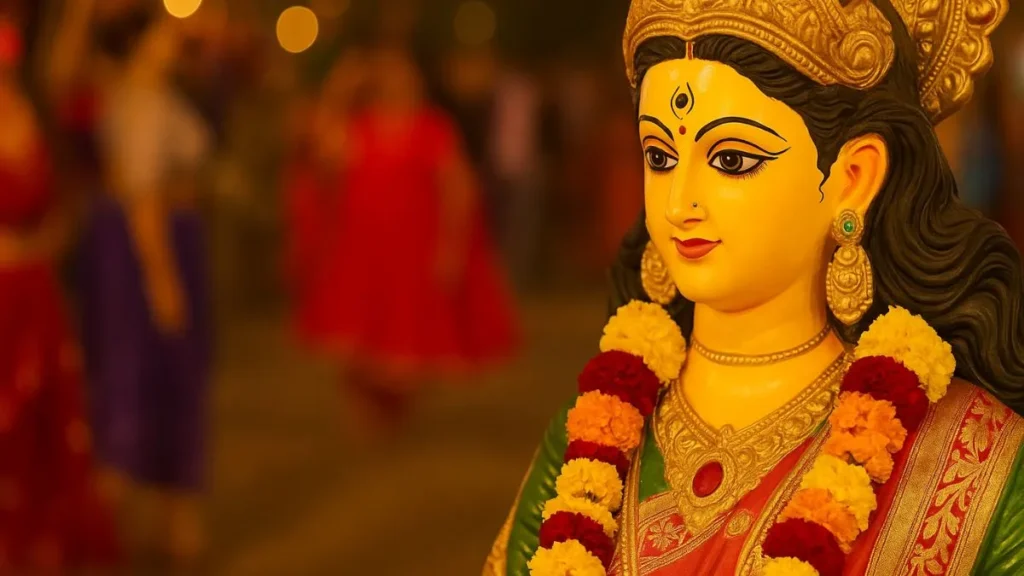
Every September-October, as the monsoon retreats and cooler evenings beckon, Vijayapura transforms into a spiritual amphitheater during the nine-day Navarathri festival. The celebration honors Goddess Durga in her nine manifestations, and the city’s neighborhoods come alive with pandals (temporary structures) housing elaborately decorated deities. Community members across neighborhoods organize Navarathri celebrations, with preparations beginning weeks in advance. Families contribute in various ways—some donate funds, others help with decorations, and many volunteer their time for cooking prasadam (blessed food). These collaborative efforts strengthen community bonds throughout the year. Vijayapura hosts numerous Navarathri celebrations across various neighborhoods, with the largest ones attracting thousands of devotees daily. The Kalyan Karnataka region, of which Vijayapura is a part, sees some of North Karnataka’s most elaborate Navarathri festivities. The festival’s significance extends beyond religious observance. During these nine days, communities unite in devotion through shared meals, collective prayers, and cultural programs that create bonds lasting throughout the year. Food plays a central role in these celebrations. Traditional dishes like jolada rotti (sorghum flatbread), enne badnekai (stuffed brinjal), and the sweet churumuri made from puffed rice are prepared in community kitchens, bringing people together through the preparation and sharing of traditional meals.